The SwaSwara experience offers genuine rejuvenation for your overworked mind
Updated: Jan 29
At SwaSwara betwixt the gossip of nature, my mind eased and my soul ‘spoke’

My experience of SwaSwara’s embrace began even before I reached there. In planning for my time at SwaSwara I was helped by Mini Chandran from CGH Earth Wellness (SwaSwara is one of their luxury eco-properties). Her warm professionalism gently set the tone for the beautiful experience that lay ahead.
At Goa Dabolim airport I was received by the SwaSwara chauffeur, Mr. Nagrajan. He carried an unmistakable, simple warmth about him that is very characteristic of Indian coastal hospitality.
The almost four hour drive to SwaSwara at Aum Beach in Gokarna, Karnataka was awe inspiringly divine. Endless stretches of lush green turned to blue green where sky made inroads through palm combs. And where the sun shone brightest, the green turned to fluorescent.
Along the way Mr. Nagrajan gave me a rundown of the retreat’s highlights with wonderful detail – like the beach hammock where you ‘lose the world’ to find yourself! But nothing prepared me for this journey but for the experience itself.

As twilight descended, it took on the hues of a mystic’s love letter to the skies. And just as the colours settled into night, stars came out to play. Like lavender gems on the cake of sky. The greenery turned to grey and then to ‘disappeared’, reappearing sporadically under clusters of stars.
We reached Gokarna once night emerged fully from the foetus of crepuscular light.
I was received by Swaswarsa’s General Manager Mr. Devadutta and welcomed by my favourite Indian coastal drink – Kokam Sharbat. It is a sweet, tangy and refreshing drink made with Kokam – a local fruit that has several health benefits including being a digestive aid.
After an introduction to ‘the SwaSwara way of life’ - one rooted in nature, Ayurveda and mindfulness, I made my way to the restaurant for dinner. The restaurant sits just above the reception and overlooks the azure of the pool. Its roof sits like a hat, precisely oversized, to keep any heat away and to let a fresh breeze in.

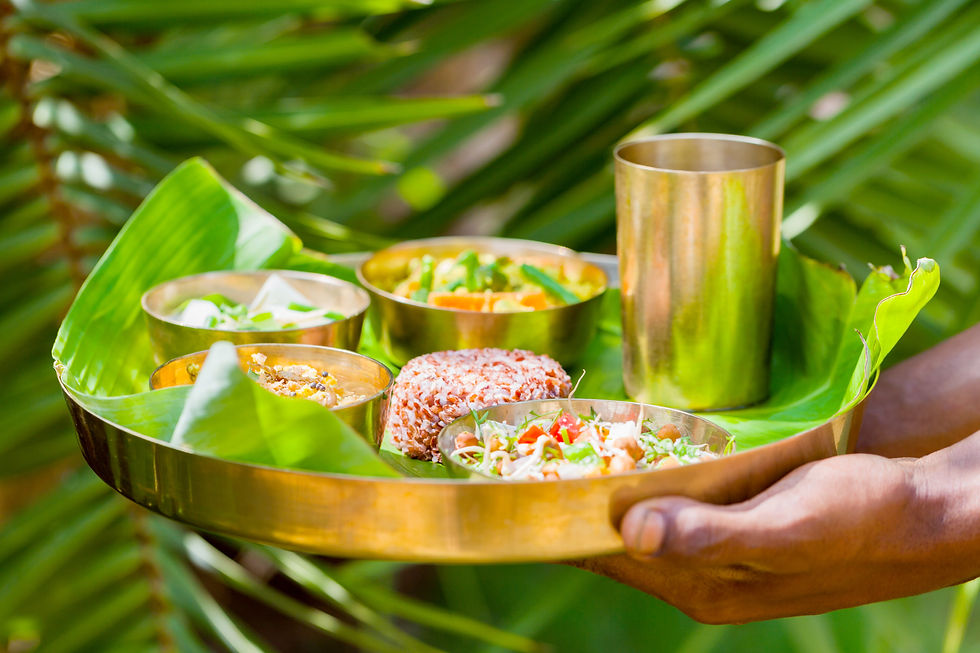
My first meal was sumptuous - a light pea soup, raw banana tikkis (patties) and Malabar style fish curry which is a local delicacy cooked with generous lashings of coconut. It was so filling that I had to give the tempting dessert of chocolate brownies and ice cream a miss. My dinner was from the standard menu served to guests not on any Ayurvedic Programme. But as I was to go on the Ayurvedic Rejuvenation Programme the next day, this meal was an exception. From day two, all meals were aligned to my Ayurvedic Dosha (type) assessment.
Post dinner I took a stroll along the delicately lit SwaSwara grounds (17 acres amidst nature infused coastline), acquainting myself with its magic. Nights at the retreat were suffused with wonder and magic. In the stillness of the SwaSwara nights I would hear the gossip between the trees and the stars. I would watch the stars crown the long palm combs bejeweling it like a maiden’s hair with sparkling clips.

My villa, as are all SwaSwara villas, was set to open skies. A spacious and comfortable main room with all the modern conveniences ensconced in nature – glass doors on two sides instead of walls that open out into the open-air bathroom, office space and dresser area. A beautifully rustic staircase led to a large balcony overlooking the bottle green river. The office area below also opened out to this serene view.

My first full day at the retreat began with a long in depth consultation with the Ayurvedic doctor. His office signature was an image of Lord Dhanvantari - the God of Ayurveda who in the mythical story from India of the churning of the oceans by the Gods and demons emerged with the vessel of the nectar of immortality. The picture bedecked with jasmine and hibiscus flowers from the estate and with an oil lamp before it brought calm and signified the promise of health.

The Ayurvedic body treatments I was prescribed by the doctor were inkeeping with my Ayurvedic Dosha assessment and consisted mainly of massages. For more intense internal cleansing treatments like Panchakarma one needs longer stays. You are usually given the same therapist for consistency and Savita was my therapist throughout. Sometimes she was joined by a fellow therapist as some massage treatments require two therapists. Each massage ritual would begin with a beautiful Sanskrit mantra (prayer) and a herbal drink that was offered both before and after the treatments. The ritual completes with the application of a sandalwood tikka on the forehead. Sandalwood in Ayurveda is deeply claiming and rejuvenating and strengthens one’s aura.
On my second night, dinner was at the Aum beach which is a short walk from the retreat’s reception. With feet dipping into soft sand, beach tree branches making heart shapes below sky and with the surf as surround sound – it was a distinctively, memorable meal.

The mediation hut and the sessions we did therein including the Omkara (meditating on the Aum sign) and Trataka (candle flame mediation) meditations and daily yoga nidra sessions by Chandran and Dr. Krupa – were profoundly relaxing and among my favourite retreat sessions.

During my walks I was often stopped in my tracks by the most stunning birds, my favourite being the teal and yellow ochre Indian Pitta. I would marvel at its flaming red tail end and black silhouetted eyes. On my last morning, a chat with The General Manager, Mr. Devadutta, who is also a naturalist, revealed the wealth of SwaSwara’s fauna - 110 species of birds, 35 spices of butterflies, 18 species of dragonflies and 11 species of ants.

Gokul, another of SwaSwara’s chauffeurs was at the wheel for my return journey to the airport. He engrossed me in his enchanting retelling of Gokarna’s sacred legends. My retreat experience was so immersive that I didn’t have a chance to explore beyond. But with Gokul’s shares I felt I had experienced the town’s holy places too. It is from Gokul that I learnt that Gokarna which means cow’s ears derives its name from the belief that Lord Shiva emerged from the ear of a cow there. The cow being Prithvi, the Mother Earth herself. In the many moments of grace that I experienced at SwaSwara, I profoundly sensed and felt the presence of Prithvi in her entirety.

A very sincere thanks to all the SwaSwara family – from those mentioned in the article to Shubim, Nikhil and Sanjana in the restaurant and Abhimanyu, Prashant and Merissa at reception.
Photo credits - SwaSwara and Dr Priya Virmani This article was written by Dr .Priya Virmani - who is an award winning author, travel expert and well being therapist.


